Quantcha Launches Consequitur Beta: Free Cross-Event Sensitivity Analytics for Prediction Markets

Quantcha, the options trading analytics platform that has served thousands of investors since 2014, today announced the public beta of Consequitur—a free tool that lets anyone map how real-world events move each other and model what a shift in one event does to the probabilities of the others.

The beta is available now at consequitur.com. No account or signup is required to explore the graph, set your own estimates, or run what-if scenarios.
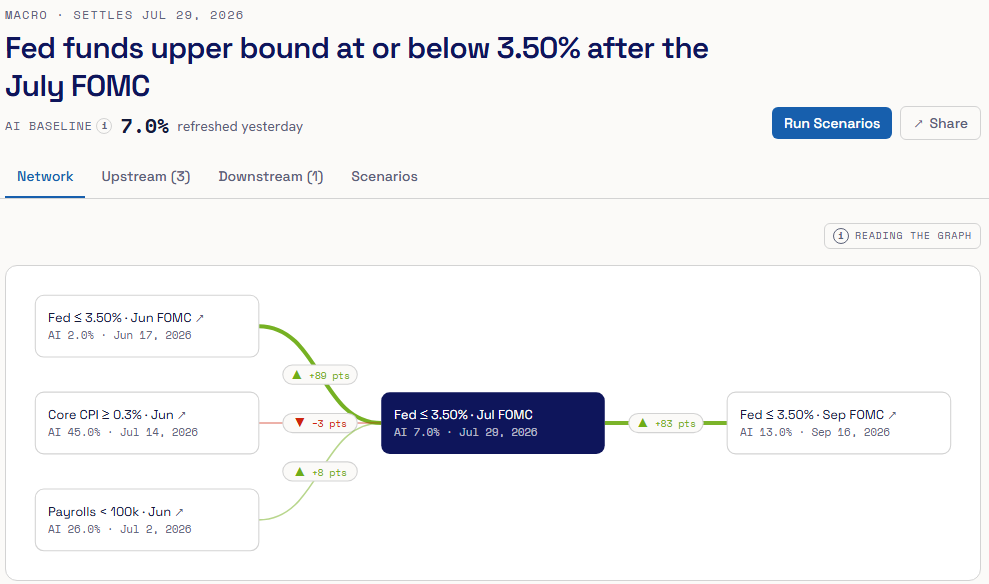
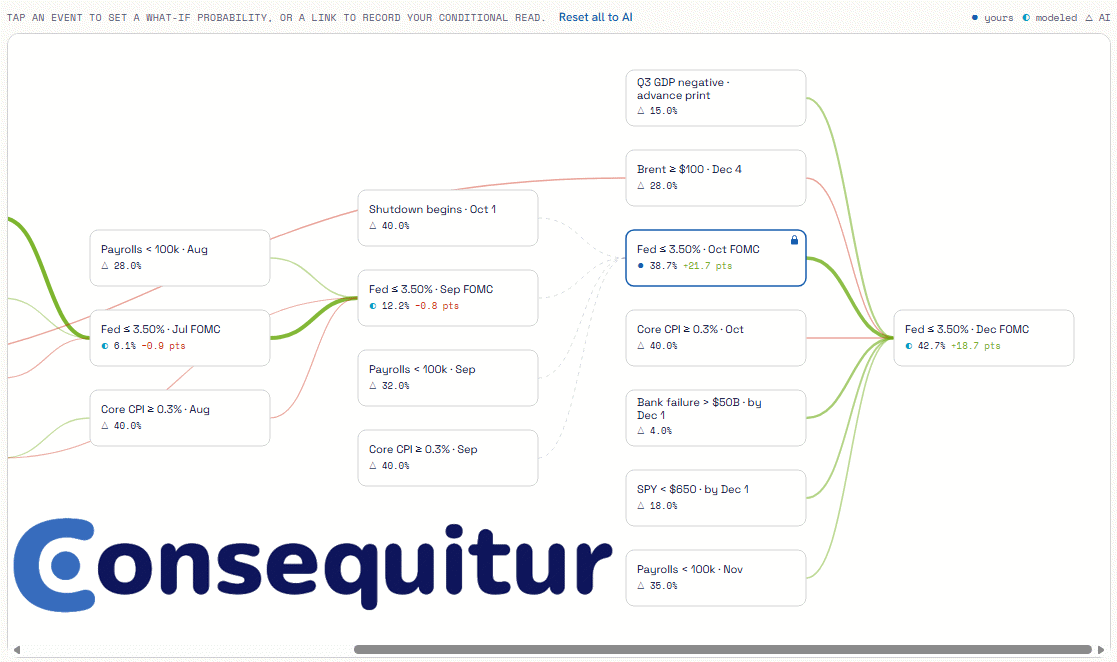
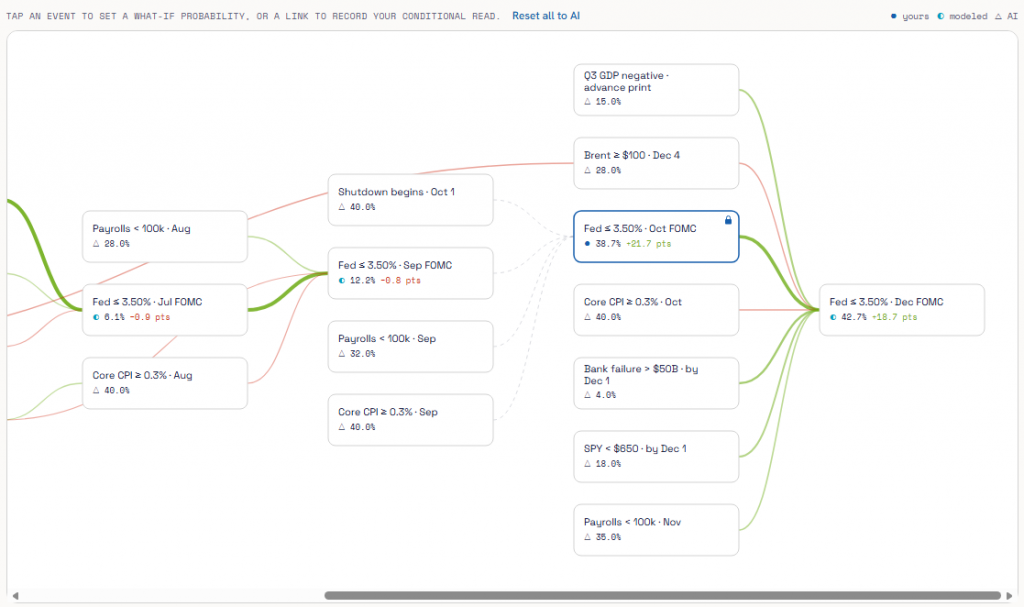
Prediction markets already price levels—the probability that any single event resolves YES—continuously and in public. What no market shows you is the conditionals: how much one event’s probability should move when another resolves. That gap is what Consequitur is built to work in. Every event arrives with a live AI baseline, informed by market prices where a market exists—Kalshi, Polymarket, and more—and every link between two events carries a starting estimate of how strongly one bears on the other. Where you disagree, you set your own. Then you run the what-if: hold an event at YES or NO and watch the implied probabilities ripple across everything connected to it.

“Markets have gotten remarkably good at pricing whether any single event happens,” said Ed Kaim, Founder of Quantcha. “What nothing prices is how events move each other. If the ceasefire collapses, what happens to oil? If oil spikes, what does the next inflation print look like? If inflation surprises, what does the Fed do? Every desk carries a mental model of that cascade, but it lives in heads and hallway conversations—there’s nowhere to put real numbers on it and see what it implies. In options, your edge comes from estimating whether implied volatility is priced correctly. In prediction markets, it comes from estimating whether the probability itself is correct. Consequitur extends that one more step: estimating whether the relationship between two probabilities is correct—then showing what that implies for every connected event. Map enough of those relationships across a book of positions and you have a sensitivity layer for event exposure—the role a risk book plays on a trading desk, but over events instead of prices. That’s the direction we’re building toward.”

A Maturing Market’s Unpriced Layer

Prediction markets have scaled from niche curiosity to mainstream financial instruments, with regulated exchanges, institutional market makers, and broadcast partnerships putting implied probabilities in front of millions of investors. The analytical layer on top of those markets is maturing quickly—but it is almost entirely within-market: charting, order books, and portfolio tools for contracts the exchanges already list. The structure connecting those contracts—how a move in one event reprices the next—is something no tool has let an individual work with directly.

The beta launches with a single anchor graph built on the question most likely to move every other market this year: does the Fed deliver at least one rate cut in 2026? The graph spans 21 events and 22 dependencies covering inflation prints, labor data, energy and geopolitics—including the ceasefire-to-oil-to-inflation-to-Fed transmission chain—and cross-domain catalysts.
Key Features

  • The Event Graph, with Live AI Baselines: A directed graph of real-world events where each node carries a live AI probability baseline, informed by market prices where a market exists—Kalshi, Polymarket, and more. It’s the starting point you adjust, not a fixed answer.
  • Your Own Estimates: Set your own view on any link between events—no account, no signup. Each estimate is recorded as the shift it implies against the baseline, so it keeps working as the underlying markets move.
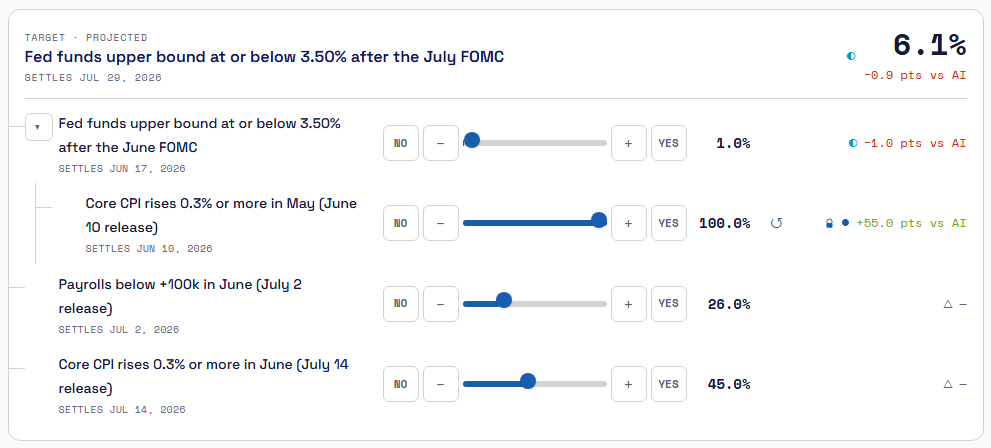
  • What-If Scenarios: Hold one or more events at YES or NO and watch the implied probabilities of every connected event move in real time.
  • Open Methodology: A live methodology page documents the model in the open; review the in-depth technical whitepaper.
  • Free and Link-Shareable: Every graph view and scenario travels via URL. Share a what-if the way you’d share a chart layout—no paywall, no gating.
The Roadmap

The public beta is deliberately scoped: one anchor graph, free, no signup. The roadmap is where the larger thesis lives. Structurally, the graph is a sensitivity surface for a book of event-contract positions—the event-space counterpart of the risk book a trading desk keeps, mapping what moves a position and by how much across events rather than prices. In the domains where no price process exists to derive such a thing—politics, policy, geopolitics—there is today no established way to compute one at all. Nearer term, the roadmap adds further anchor graphs and synthetic market discovery: inferring implied probabilities for events no exchange currently lists from the conditional structure around them. All of this is future work; what is live today is the Fed graph, your own estimates, and what-if Scenarios.

Consequitur is a sister product to Qwidgets for Prediction Markets, Quantcha’s within-market analytics platform: Qwidgets covers comparing and trading contracts across exchanges, while Consequitur covers the relationships between the events themselves.

Explore the graph, set your estimates, and model a what-if at www.consequitur.com.
Quantcha Launches Qwidgets for Prediction Markets: Free Cross-Platform Analytics for an Emerging Asset Class

Quantcha launches Qwidgets for Prediction Markets, a free platform bringing cross-exchange analytics, integrated Kalshi trading, and portfolio modeling to the prediction markets space.

Quantcha, the options trading analytics platform that has served thousands of investors since 2014, today announced the launch of Qwidgets for Prediction Markets—a free platform that brings the analytical depth of professional options tools to the rapidly expanding prediction markets space.

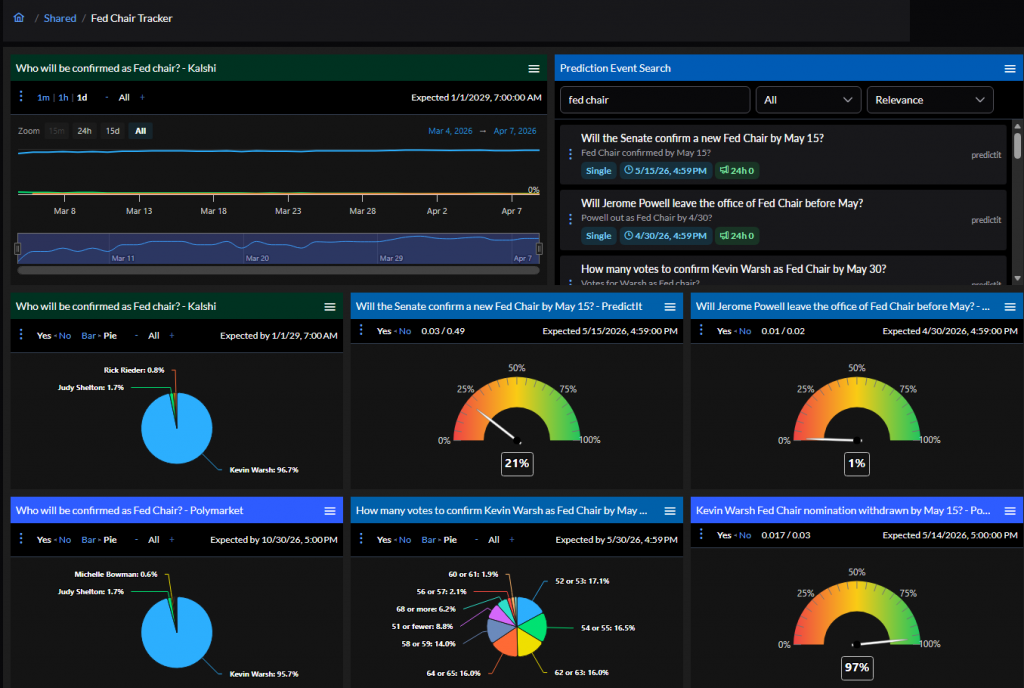
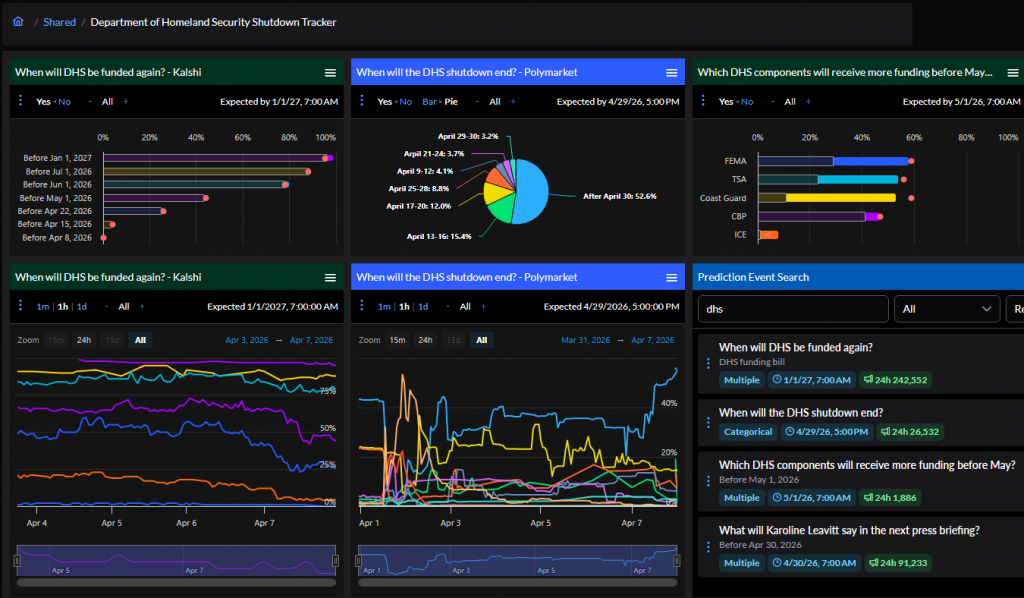
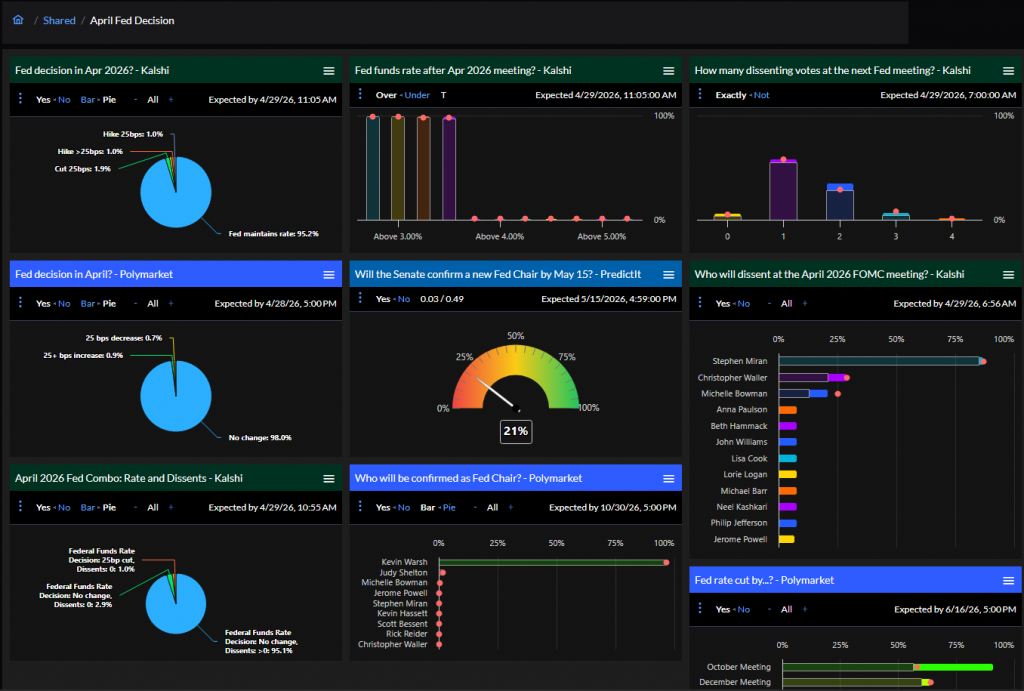
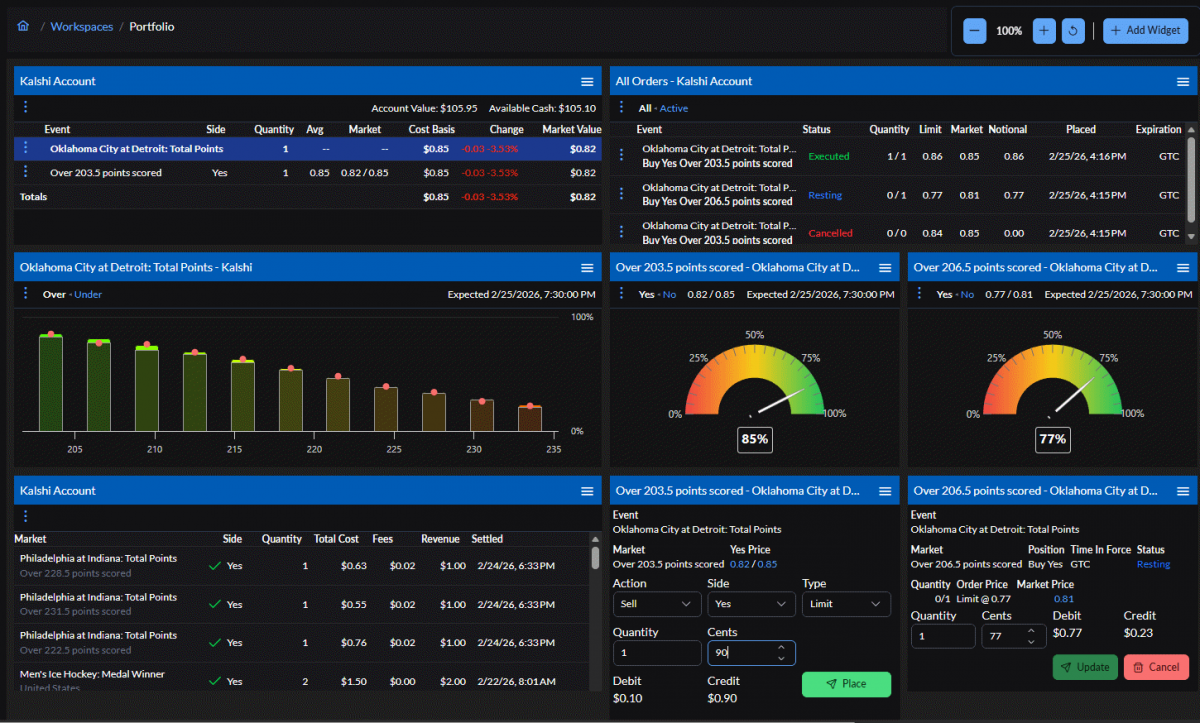
Available now at https://predictions.qwidgets.com, Qwidgets for Prediction Markets aggregates real-time data from Kalshi, Polymarket, and other exchanges into a unified view, enabling investors to analyze, compare, and trade prediction market contracts with the same rigor they apply to options strategies.

“Prediction markets are the most important new financial instrument in a generation, but the tools haven’t caught up to the opportunity,” said Ed Kaim, Founder of Quantcha. “We’ve spent more than a decade building analytics tools for options traders. When I started analyzing prediction markets, I realized the same probability-assessment discipline applies directly—but the source of your edge is different. In options, you’re estimating whether time value and implied volatility are priced correctly. In prediction markets, you’re estimating whether the probability itself is correct. The analytical rigor is the same. The tools just didn’t exist yet. That’s what Qwidgets is.”

A Market Ready for Better Tools

Prediction markets have exploded in both volume and mainstream visibility. Kalshi, the only CFTC-regulated prediction market exchange, recently raised $1 billion at a $22 billion valuation. Polymarket processes over $20 billion in monthly trading volume. CNBC and CNN have signed partnership deals to broadcast prediction market data alongside traditional market tickers. The regulatory environment has shifted meaningfully, with the CFTC moving away from its earlier adversarial posture and federal policy appearing broadly supportive of prediction market development.

Yet despite this growth, the tools available to prediction market participants remain basic. The major exchanges offer simple charting and order entry, with no cross-platform comparison, no portfolio-level analytics, and limited analytical depth.

“This is where options markets were 15 years ago,” Kaim said. “The instruments are sound, the regulatory framework is solidifying, and institutional capital is arriving. What’s missing is the analytical layer. That’s exactly the gap Quantcha was built to fill for options, and it’s the gap Qwidgets fills for prediction markets.”

Key Features

  • Cross-Platform Data Aggregation: View and compare prediction market contracts from Kalshi, Polymarket, and other exchanges in a single, unified interface. Identify pricing discrepancies across platforms that would otherwise require monitoring multiple sites.
  • Integrated Kalshi Trading: Analyze and execute trades directly within Qwidgets. Research a contract, compare cross-platform pricing, and place an order without switching between applications.
  • Portfolio Modeling and Optimal Sizing: Express a model of relative likelihoods for outcomes within an event and generate optimized position sizing using frameworks like the Kelly criterion. Move beyond gut-feel sizing to mathematically disciplined allocation.
  • Shareable Workspaces: Create custom analysis workspaces and share them with anyone via a link. Recipients can view and modify the workspace locally without creating an account. Share a market analysis the same way you’d share a TradingView layout.
  • Free, No Restrictions: All features are available at no cost with no usage limits.

Built for Options Traders—and Everyone Else

Prediction markets price real-world events as probabilities, and the analytical skills options traders already have—probability assessment, sensitivity analysis, portfolio construction—transfer directly.

Qwidgets for Prediction Markets is designed to make those skills actionable. For options traders, it provides the familiar analytical depth in a new market. For prediction market participants coming from other backgrounds, it introduces the rigor and discipline of professional trading tools.

Accompanying Content Series

Alongside the platform launch, Quantcha is publishing an eight-part article series that explores the intersection of options trading and prediction markets:

The full series is available on Quantcha’s web site. Each article is designed for syndication across LinkedIn, Seeking Alpha, Substack, and financial media platforms.

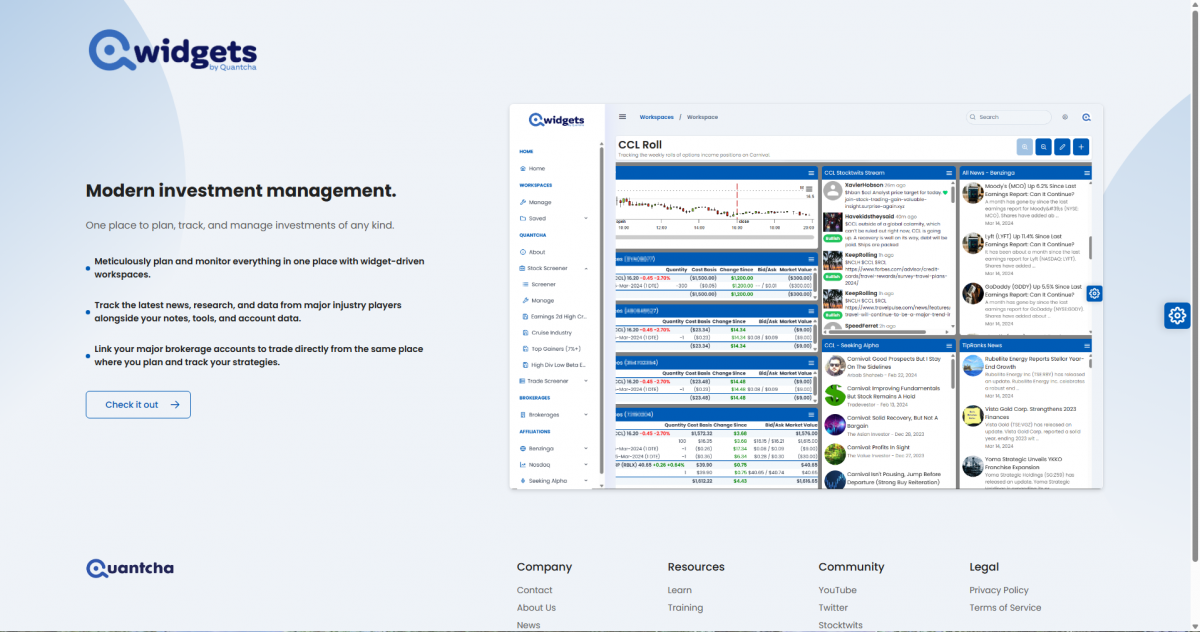
Introducing Qwidgets: The free place to plan, track, and manage your investments

We’ve been proud to deliver top-quality tools and services to the option investment community for the past decade. However, in that time we’ve received tons of feedback that the entire industry wasn’t properly serving its membership with the tools it needs to effectively organize their various strategies.

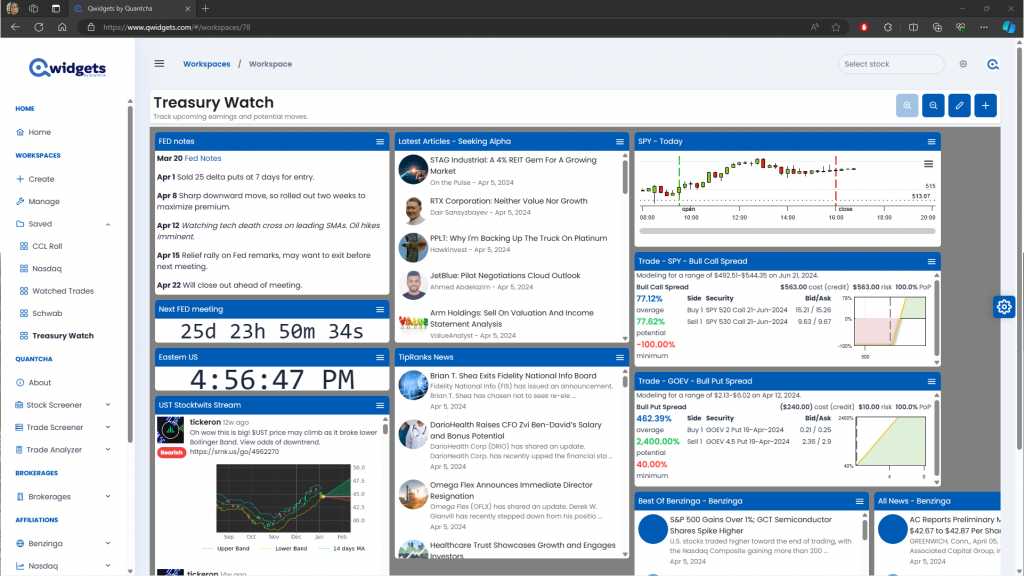
A workspace to monitor Fed moves

Around a year ago we set out on a journey to update Quantcha to provide tools to meet these needs. Our vision was to deliver a workspace-driven user experience where users would be able to precisely customize each workspace to fit their exact needs for the task at hand. This customization would come in the form of task-focused widgets designed to chart quotes, track trade ideas, manage orders, and so on. The scenarios were endless, so we knew it needed to be flexible.

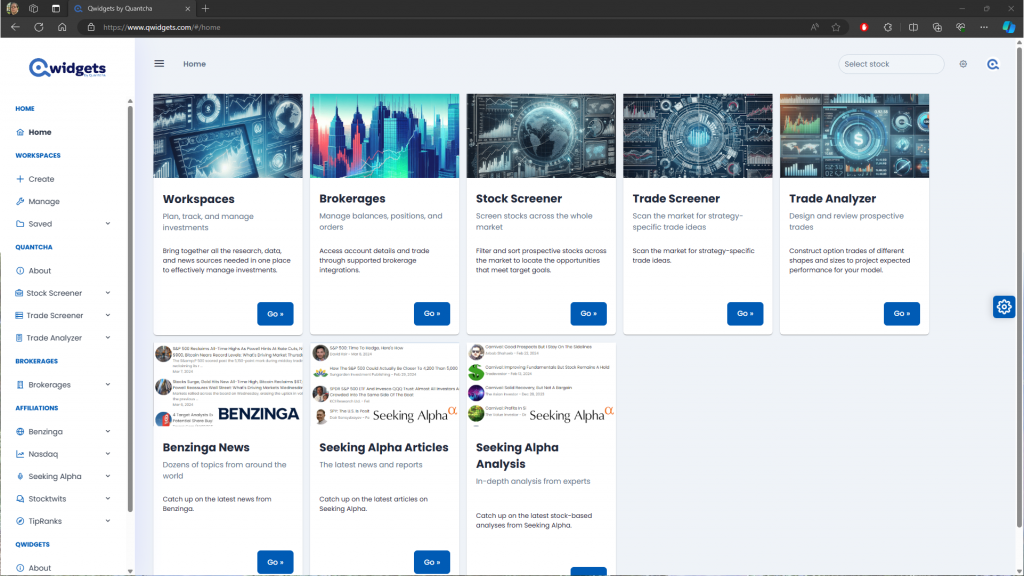
Qwidgets Home view

As we started showing our industry partners early demos of this new feature—which we were calling Quantcha Widgets—there was consistent feedback that it would be really helpful to a much broader audience than our traditional options investor customers. As a result, we made the decision to launch it as a separate service called Qwidgets and make it free for everyone.

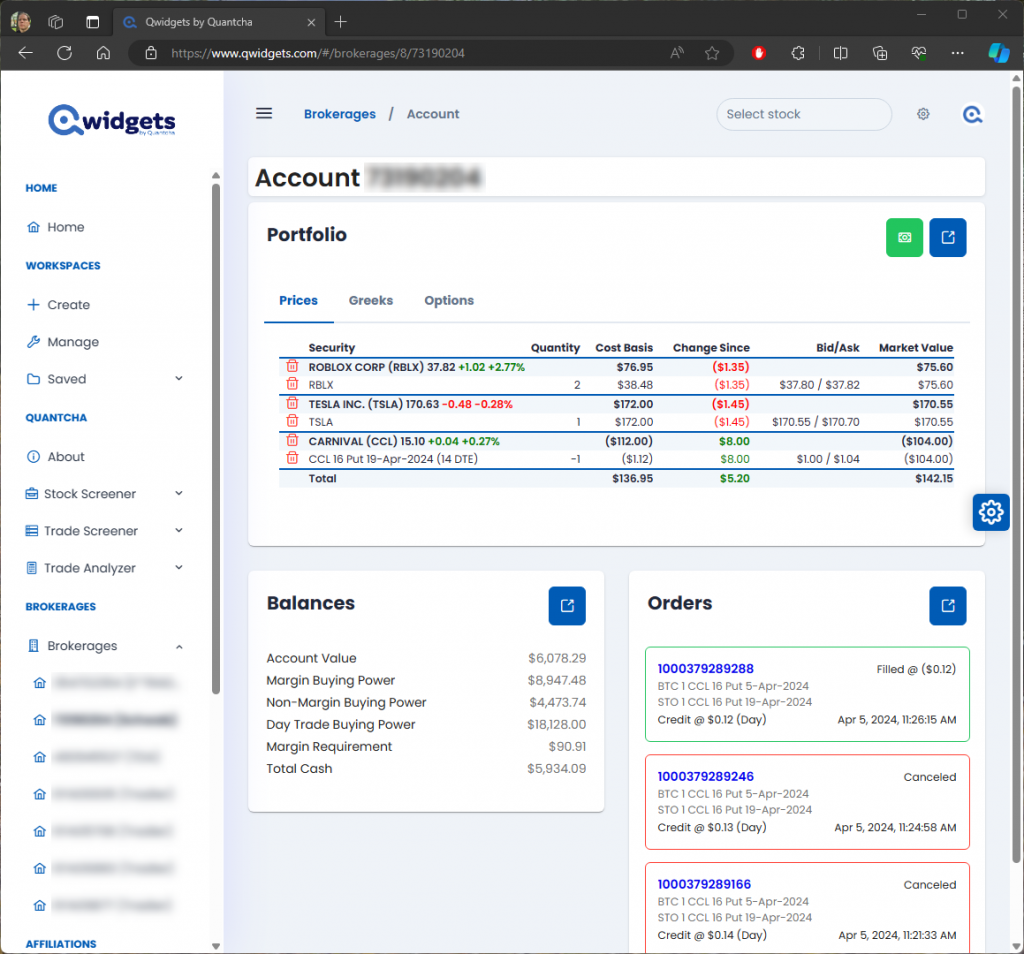
Integrated brokerage support

We also knew that users relied on a lot of data and functionality beyond what we delivered. To meet those needs, we partnered with some of the best names in finance to integrate brokerage, news, analysis, social media, and more. We envisioned a platform where anyone could place and manage orders alongside the latest research and breaking developments.

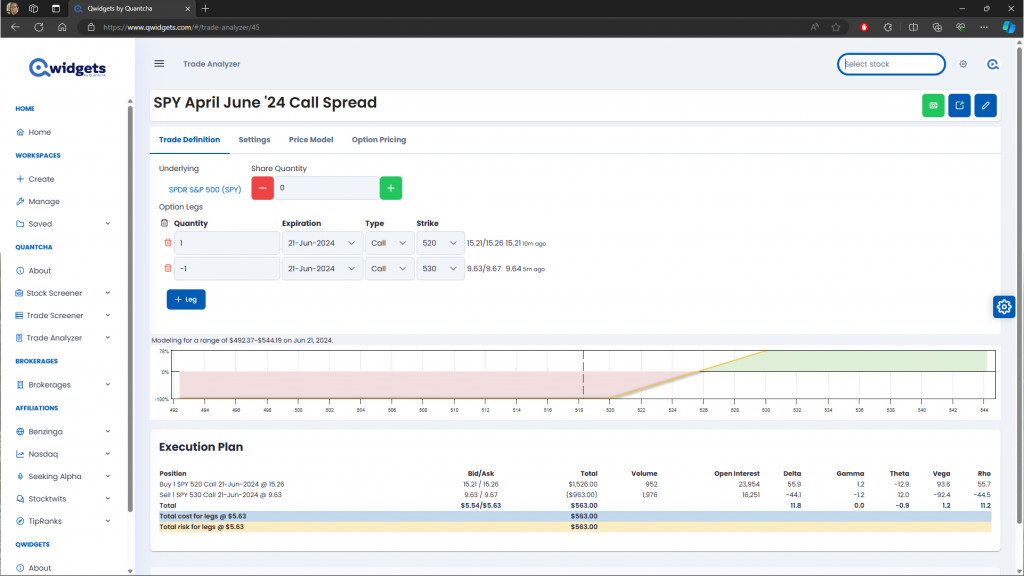
Integrated trade analyzer

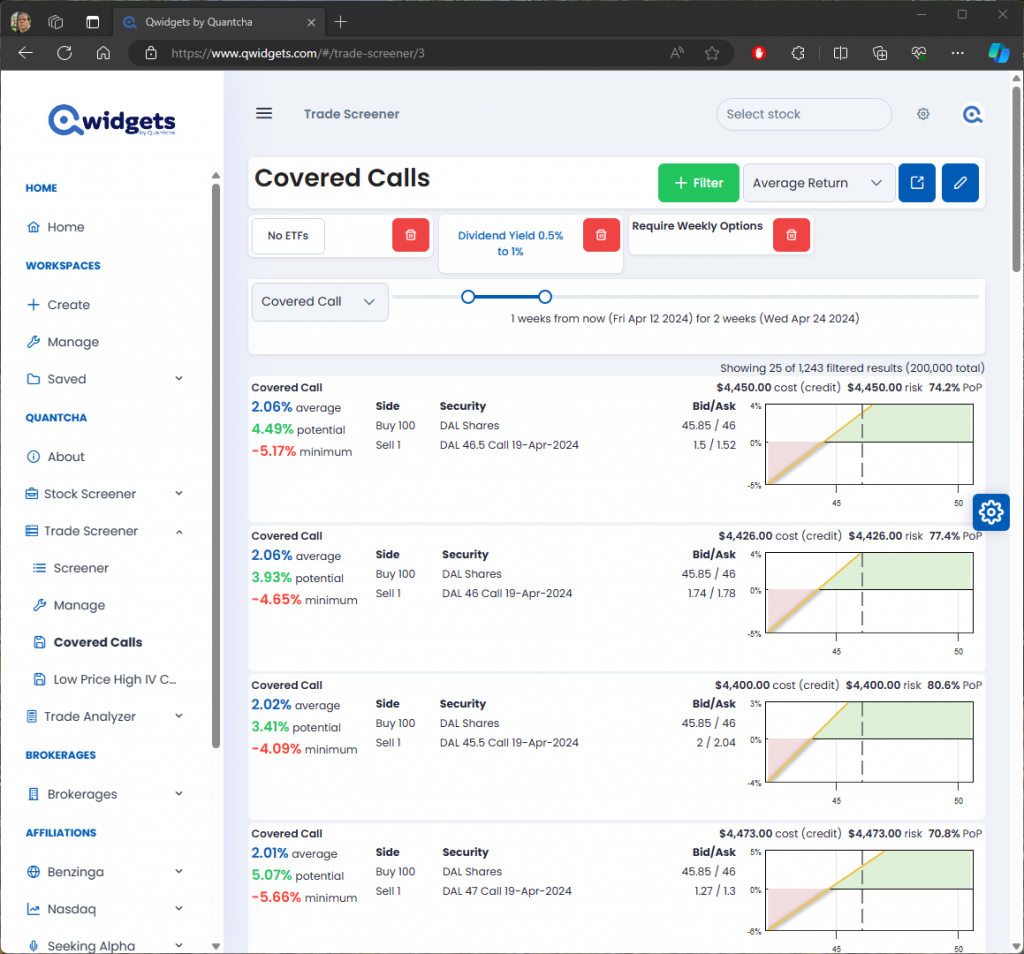
To use Qwidgets you’ll need to create a new account that’s separate from your Quantcha account. However, you can then link your Quantcha account in order to enable some advanced options-focused features, such as pages and widgets for screeners and the trade analyzer. Over time we’ll be migrating all of our Quantcha functionality to Qwidgets so that subscribers can enjoy the full depth of our functionality on either platform.

Trade screener powered by Quantcha

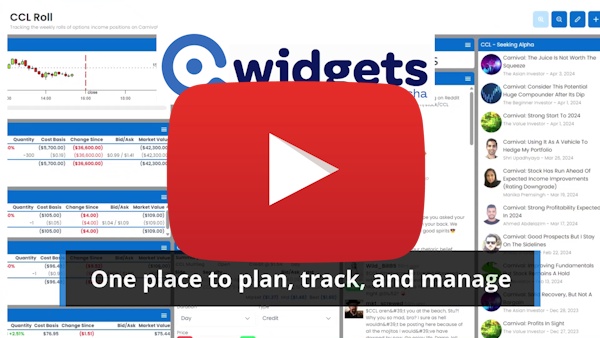
If you have feedback, please let us know at hello@quantcha.com. In the meantime, check out our launch video!

Qwidgets launch video

Announcing Quantcha’s Integration with Charles Schwab

We’re proud to announce that we have launched our integration with Charles Schwab. This enables Charles Schwab brokerage customers to manage their account positions and orders directly from Quantcha. Create and link your account today.

The Quantcha Options Suite complements Charles Schwab’s existing options platform with sophisticated options book management, detailed trade reporting, proactive alerts, and a wide variety of trade discovery and analysis tools.

At this time our Schwab integration relies on Quantcha’s 20m delayed data feed. When Schwab publishes their market data API we will update our integration implementation to use it.

Create and link your account today.

Announcing Quantcha’s New Free Trial Model

We’re excited to share a new way for investors to try out Quantcha Options Suite at no cost. Effective immediately, all users linked to a supported brokerage account will receive full subscription access for the first five days of each month (May 1-5, for example). This temporarily elevated access requires no additional steps beyond linking the brokerage account with their Quantcha account and includes the full functionality of a subscription.

Quantcha currently provides integration with major brokerages, including Charles Schwab’s TD Ameritrade, Morgan Stanley’s E*TRADE, and Tradier. To learn more about our brokerage integration, please see the documentation.

Quantcha’s Latest Research Report on Trading Earnings with Options Now Available

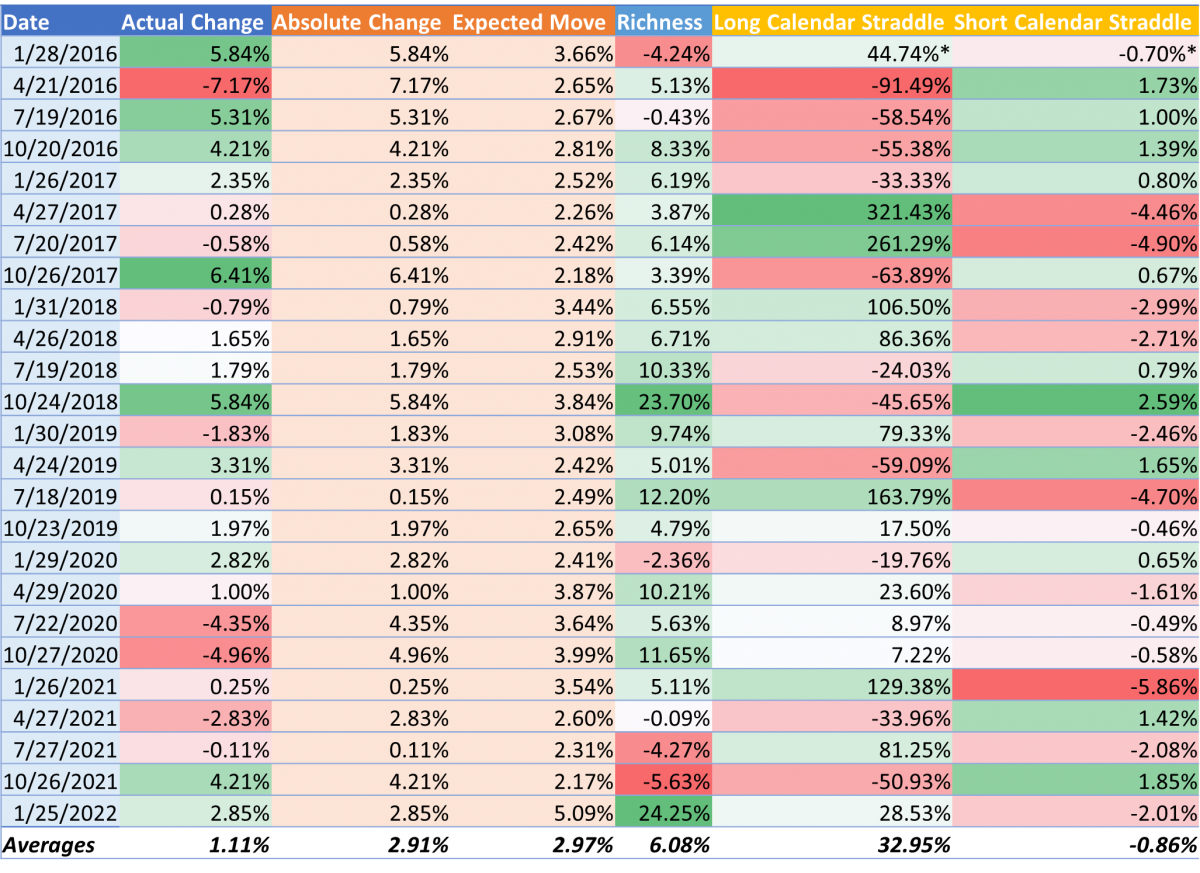
We’re proud to announce that our latest research report, An analysis of trading earnings releases using options, is now available. This report analyzes the behavior of options and implied volatility before and after earnings announcements.

The report focuses on answering common questions about trading earnings with options, including:

  • Why trade options around earnings?
  • How are earnings options priced?
  • What about trading earnings directionally with options?
  • How do we compare returns of long and short strategies?
  • How important is option liquidity?
  • What is implied volatility crush (IV crush)?
  • What is earnings IV crush?
  • How much does IV crush after earnings?
  • Can we predict the earnings IV crush?
  • Can we infer anything from the volatility surface?
  • Can we still lose by selling overpriced IV?
  • How can we hedge against directional moves?
  • How do calendar trades hedge out directional risk?
  • How can we employ calendar trades to capitalize on IV crush?
  • How does this analysis hold up across the broader market?

It also includes details on how anyone can gain special insights regarding trading options around earnings via option-centric data.

The report is also available as a PDF for download.

Quantcha’s Latest Research Report on Market Corrections Now Available

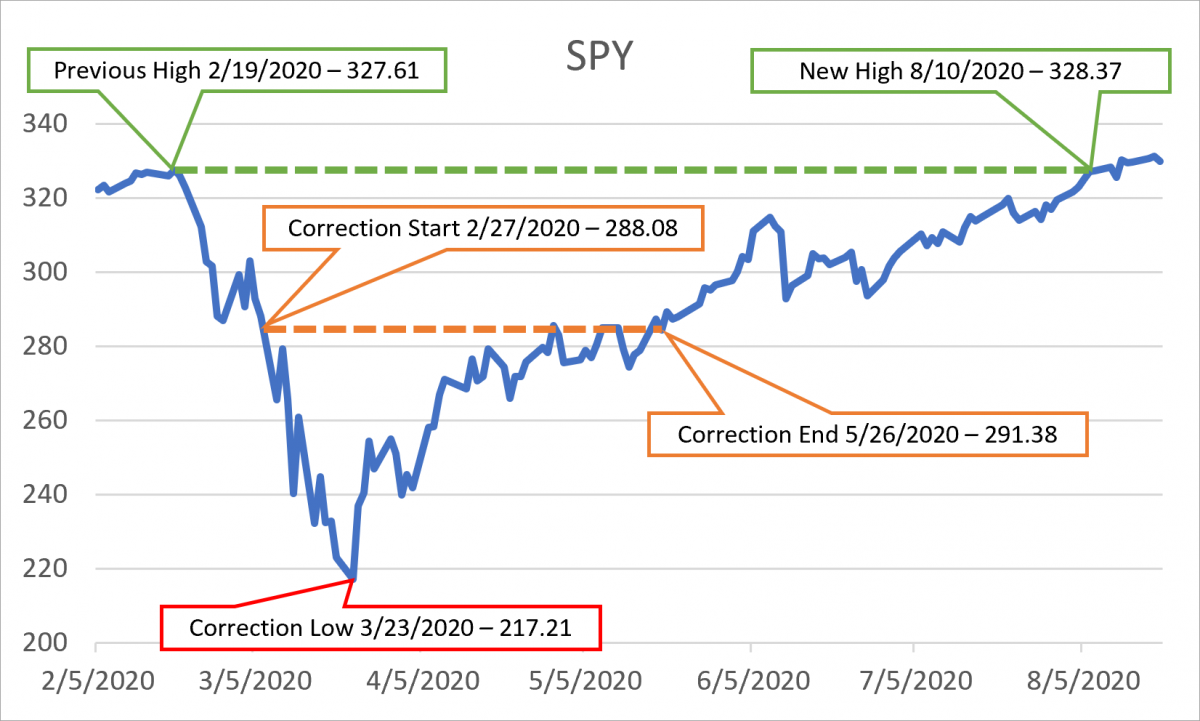
We’re proud to announce that our latest research report, What do we know about market corrections?, is now available. This report analyzes market correction cycles as indicated by a 10%+ drop in the S&P 500.

The report focuses on answering common questions about market corrections, including:

  • How often do corrections happen?
  • How long does it take to enter a correction from a high?
  • What can we expect once we enter a correction?
  • How does the market perform during a correction?
  • Is it worth trying to call a bottom?
  • How long does it take to recover from the bottom?
  • What happens after corrections?
  • What can we do with the data we have?
  • What happens if you invest at the start of a bull run?
  • How do we know when a correction is coming?
  • How do we know when a correction is easing?
  • What kind of returns can we expect from different correction milestones?
  • Is there an ideal strategy for correction investing?

It also includes details on how anyone can gain special insights regarding correction progress via option-centric data.

The report is also available as a PDF for download.

Announcing Quantcha’s Stress Tester

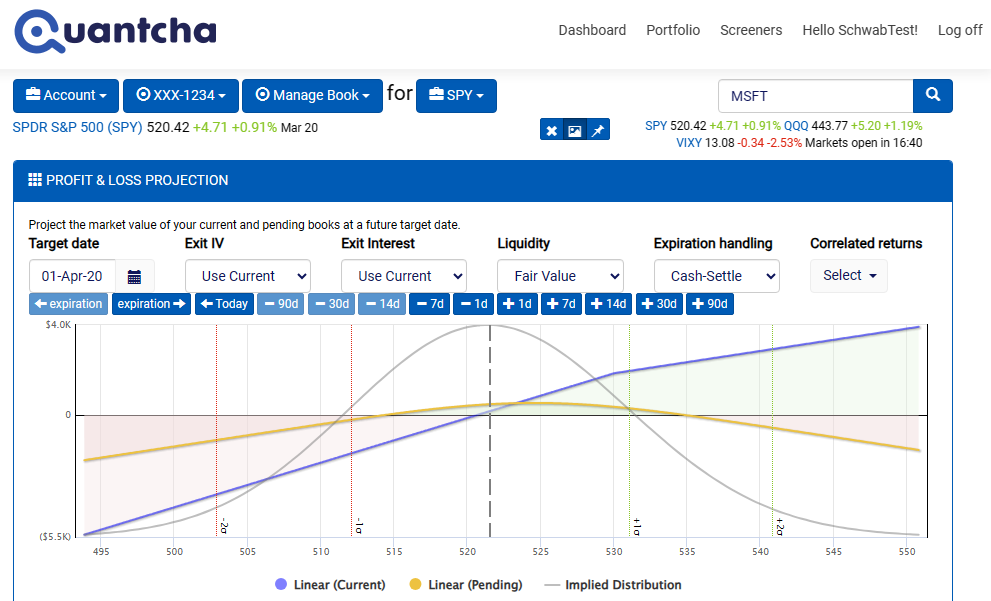
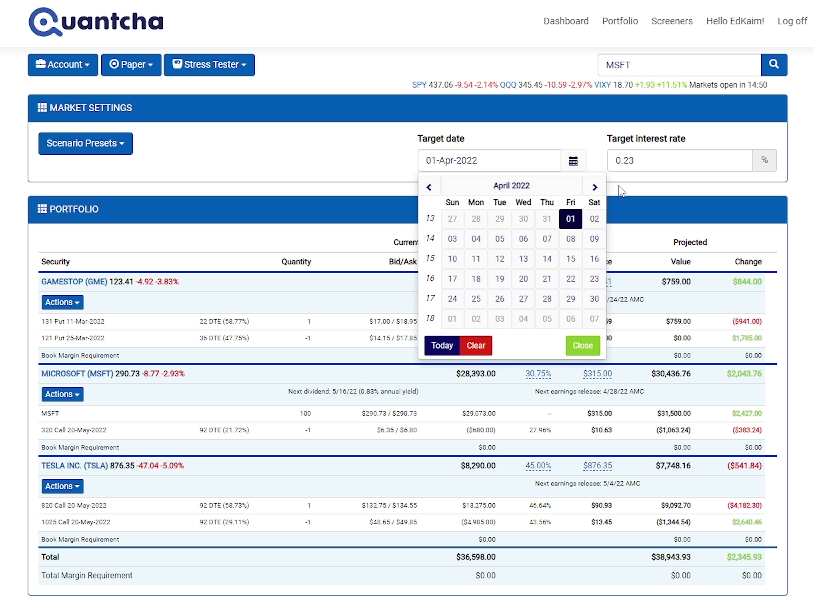
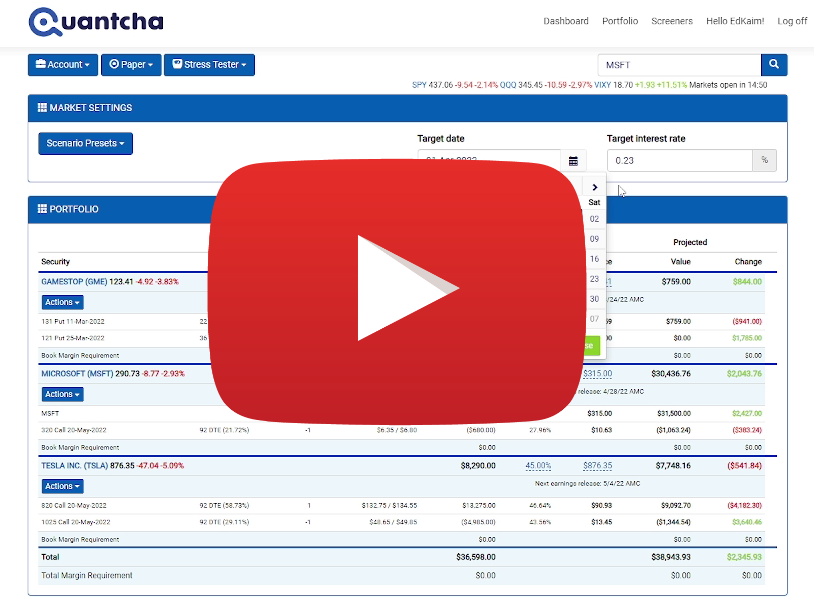
We’re proud to announce the launch of our new portfolio stress tester. It provides a straightforward experience for investors to project how their portfolios will handle arbitrary market conditions at a future date, including changes in interest rates, as well as underlying prices and volatilities.

The stress tester complements our powerful book manager to further equip investors with the tools they need to manage sophisticated option portfolios. Whereas the book manager provides superior in-depth analysis and experimentation with underlying-specific books, the stress tester offers breadth analysis for potential market scenarios.

Check out a video walkthrough of the stress tester on YouTube.

Learn more about stress testing option portfolios with Quantcha.

Announcing Quantcha’s support for Two-Factor Authentication

We’re proud to announce that Quantcha now requires two-factor authentication (2FA) for all accounts. When users log in, they must additionally enter a security code that has been sent to the email address associated with their account.

This step helps guard against the risk of an attacker guessing their credentials since they would also need access to the user’s email account in order to log in on their behalf. Further, the code emails provide early warning to users in the event someone else figures out their Quantcha credentials.

Quantcha’s 2FA requirement applies whether the account is secured with an email/username and password or a 3rd party login, such as Facebook or Twitter.

Announcing Quantcha’s Calendar Search

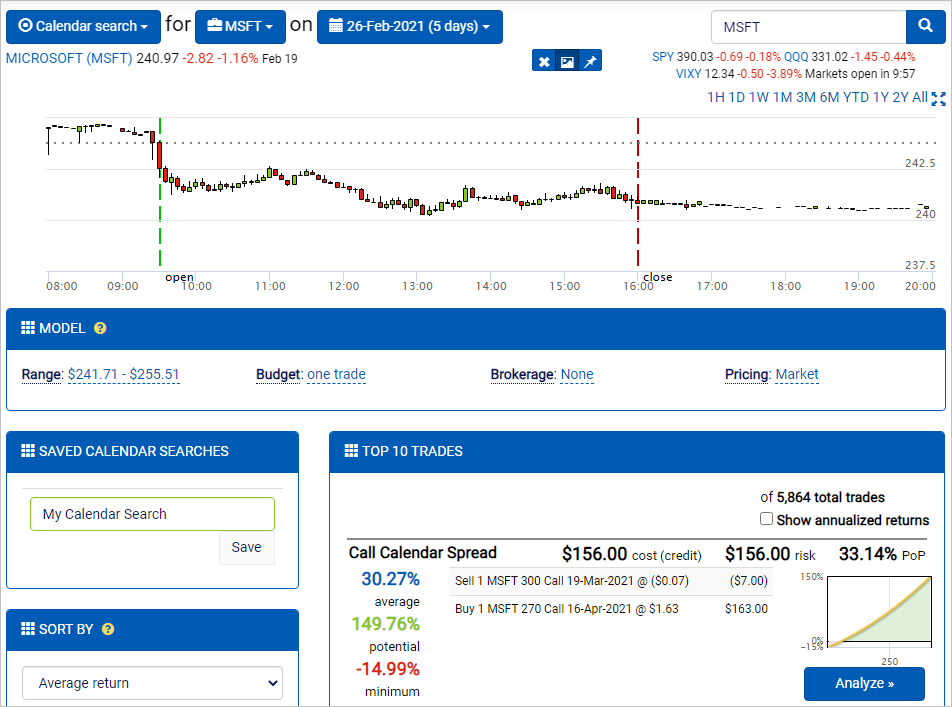
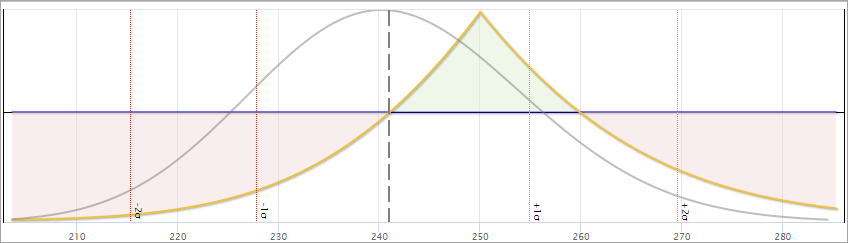
We’re proud to announce the launch of our new calendar search functionality. Modeled after the options search engine, the calendar search makes it easy for investors to identify optimal calendar spread opportunities based on an underlying, a timeframe, and a price target range.

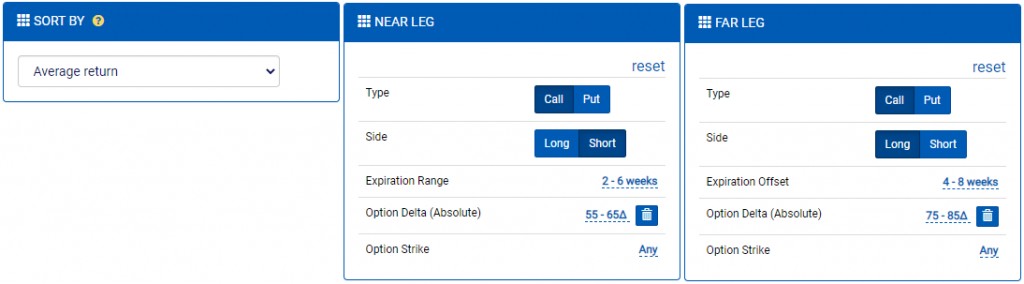
In addition, you can also use a variety of filters to zero in on the near and far legs based on expiration ranges, delta requirements, and strikes. There are also net Greek filters so that you can zero in on trades that meet specific criteria.

This launch also includes several key updates to the trade analyzer, including support for analyzing any trade on an expiration at or before the earliest-dated option leg. While the book manager provides the ultimate flexibility for modeling trades and complex strategies, this addition to the trade analyzer makes it easier to evaluate prospective trades before merging them into existing books.

Check out a video walkthrough of the calendar search on YouTube.

Learn more about trading calendar option strategies with Quantcha.